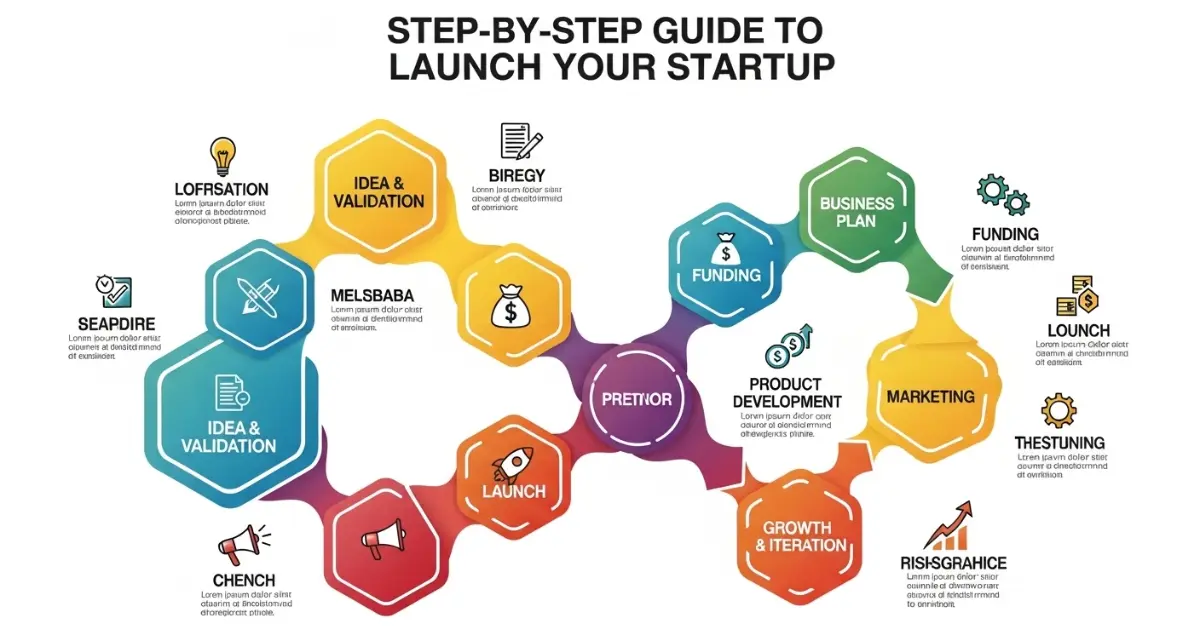
Starting a startup is not just about having a good idea. It is about turning that idea into a real business that solves a problem, helps people, and makes money in a smart way. Many beginners fail because they rush or do not follow the right steps. This Step by Step Guide to Launch Your Startup will help you understand everything in a very simple way so even a beginner or student can follow it easily and start building their own business with confidence.
Understanding What a Startup Really Is
A startup is a small new business that is created to solve a problem in a new or better way. It usually starts small but has the goal to grow big over time.
Key points:
- A startup solves real problems
- It starts with small resources
- It grows step by step
- It focuses on innovation and improvement
Many people think startups are only for tech experts, but that is not true. Anyone with a strong idea and dedication can start.
Finding a Real Problem to Solve
Every successful startup begins with a problem. If there is no problem, there is no need for your business.
How to find problems:
- Look at daily life issues
- Ask people what they struggle with
- Observe what is missing in the market
- Think about your own problems
Examples:
- Food delivery delays
- Expensive education tools
- Lack of good online services in small cities
A strong startup always solves a real and painful problem.
Turning Your Idea into a Simple Business Concept
Once you find a problem, the next step is to create a simple idea to solve it.
Important tips:
- Keep your idea easy to understand
- Do not add too many features at the start
- Focus on solving one main problem
- Think like a customer, not just an owner
Instead of building a complex app, start with a simple service that solves one issue first.
Market Research Before Starting
Market research means understanding your audience and competitors before you start.
You should learn:
- Who will use your product
- What people already use
- What is missing in current solutions
- How much people are willing to pay
Benefits of market research:
- Reduces risk of failure
- Helps you improve your idea
- Saves time and money
- Gives clear direction
Without research, you are just guessing.
Creating a Simple Startup Plan
A business plan is like a roadmap for your startup journey.
Your plan should include:
- Business idea summary
- Target customers
- Budget estimation
- Marketing strategy
- Growth goals
Keep it simple. You do not need a complicated document at the start. Just clear planning is enough.
Choosing the Right Business Model
A business model explains how your startup will make money.
Common models:
- Selling products directly
- Subscription services
- Online services
- Commission based platforms
Tips for choosing:
- Pick what fits your idea
- Think about customer comfort
- Start with simple pricing
- Adjust later if needed
A wrong business model can slow down your growth, so choose carefully.
Building a Minimum Viable Product
A Minimum Viable Product means a basic version of your product with only main features.
Why it is important:
- Saves time and money
- Helps you test ideas quickly
- Allows real user feedback
- Reduces risk of failure
Steps:
- Build simple version first
- Focus only on core problem
- Avoid extra features
- Launch quickly
Remember, perfect products come later. Start simple.
Testing Your Idea with Real Users
After building your basic product, test it with real people.
What to do:
- Share with friends or small groups
- Collect honest feedback
- Observe user behavior
- Fix problems quickly
Benefits:
- Understand customer needs better
- Improve product quality
- Build trust early
- Avoid big mistakes later
Real feedback is more valuable than assumptions.
Setting Up Your Business Legally
Before scaling, make sure your startup is legal and safe.
Basic steps:
- Register your business name
- Open a business bank account
- Understand local rules
- Get necessary permissions
Why it matters:
- Builds trust with customers
- Protects your business
- Avoids future legal problems
Do not ignore this step, even if your business is small.
Building a Strong Brand Identity
Your brand is how people see your startup.
Important parts:
- Business name
- Logo design
- Color style
- Communication tone
Tips:
- Keep branding simple
- Make it easy to remember
- Stay consistent everywhere
- Focus on trust and clarity
A strong brand helps you stand out in the market.
Creating Your Online Presence
Today, every startup needs an online presence.
You can:
- Create a simple website
- Use social media platforms
- Share useful content
- Engage with audience
Why it is important:
- People trust online businesses
- Easy marketing reach
- Builds credibility
- Attracts customers globally
Even a small page can bring big opportunities.
Marketing Your Startup on a Budget
Marketing does not need a big budget in the beginning.
Low cost methods:
- Social media marketing
- Word of mouth promotion
- Content creation
- Free online platforms
Tips:
- Be consistent
- Focus on value not ads
- Understand your audience
- Try different strategies
Smart marketing can grow your startup fast.
Getting Your First Customers
First customers are the most important milestone.
How to get them:
- Offer discounts or trials
- Ask friends and family
- Promote in local groups
- Use social media outreach
Once you get customers:
- Listen carefully to feedback
- Improve your service
- Build trust and relationships
Happy first users bring more customers.
Managing Money Wisely
Money management is very important for startups.
Key tips:
- Track all income and expenses
- Avoid unnecessary spending
- Reinvest profits into growth
- Plan monthly budget
Common mistake:
- Spending too much too early
Good financial control keeps your startup alive.
Scaling Your Startup
Scaling means growing your business step by step.
When to scale:
- You have regular customers
- Your product is stable
- You understand the market
Ways to scale:
- Expand product features
- Hire small team
- Enter new markets
- Increase marketing efforts
Never rush scaling. Grow slowly and safely.
Common Mistakes to Avoid
Many startups fail because of simple mistakes.
Avoid these:
- Starting without research
- Ignoring customer feedback
- Overspending early
- Trying to do everything at once
- Giving up too soon
Learning from mistakes is part of success.
Common FAQs About Step by Step Guide to Launch Your Startup
Faqs of Step by Step Guide to Launch Your Startup:
What is a startup in simple words?
A startup is a new business created to solve a problem in a unique way.
Do I need money to start a startup?
Not always. Some startups can start with very low investment.
How long does it take to build a startup?
It depends, but most startups take months or years to grow.
Can a student start a startup?
Yes, students can start with small ideas and grow step by step.
What is the most important step in starting a startup?
Finding a real problem is the most important step.
What is MVP in startups?
It is a basic version of your product with only main features.
Why do startups fail?
Mostly due to lack of planning, research, and customer understanding.
How can I get my first customers?
Through social media, friends, and simple promotions.
Final Thoughts
Starting a startup is not easy, but it is possible for anyone with the right mindset and steps. This Step by Step Guide to Launch Your Startup shows that success comes from planning, patience, and continuous improvement. If you follow each step carefully, you can turn your simple idea into a real and successful business.